Birds · Field Record
Black-capped Chickadee
Poecile atricapillus
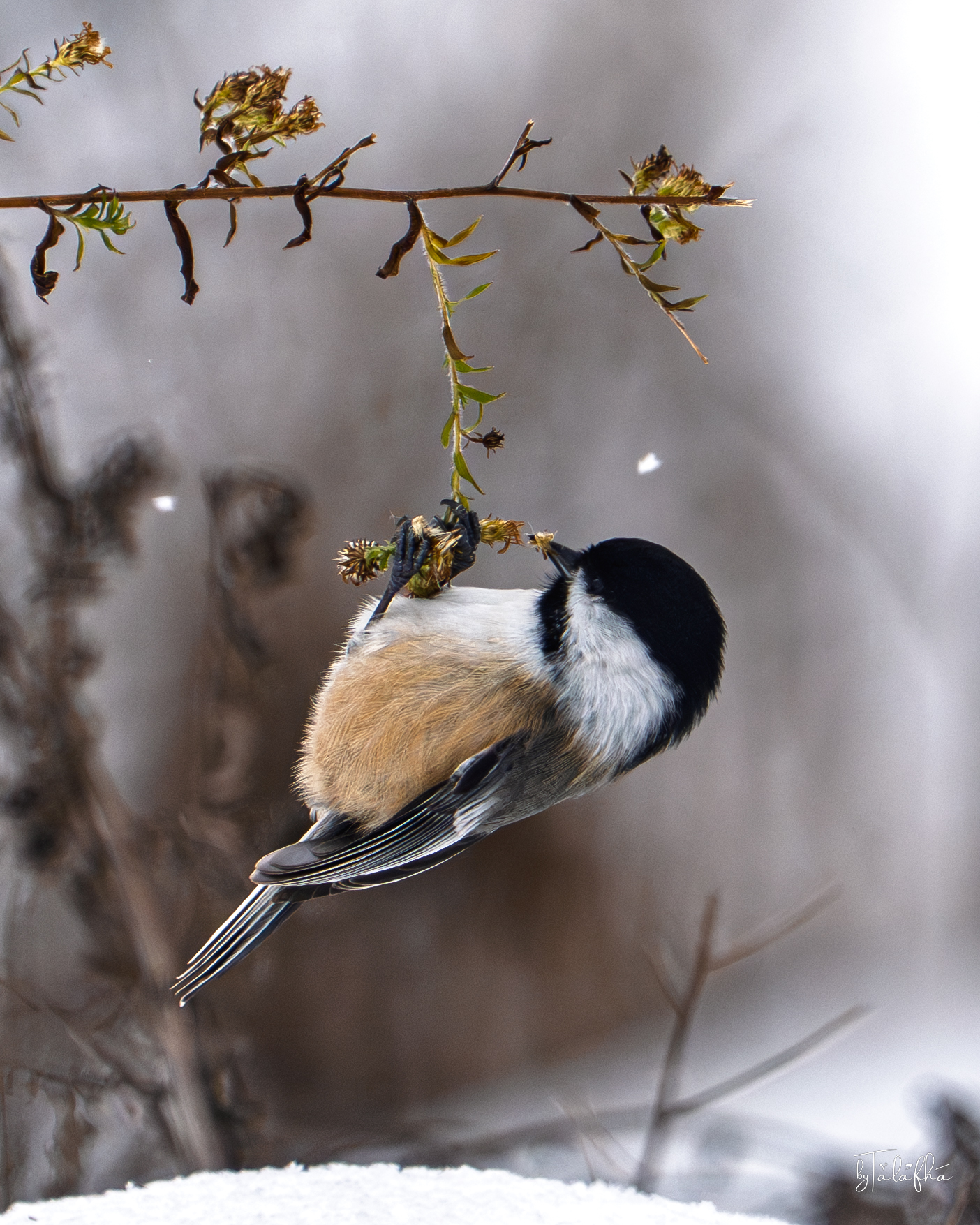
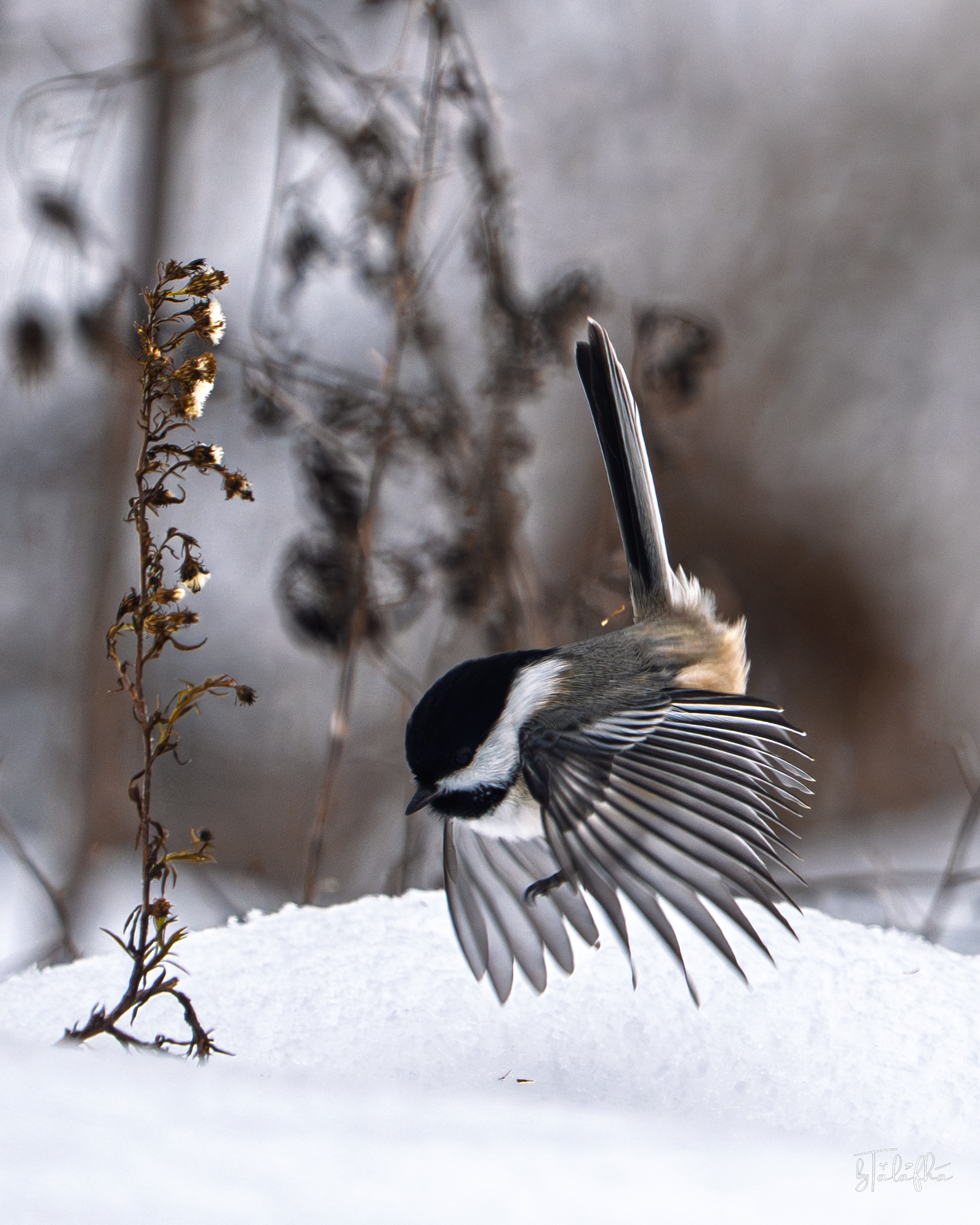
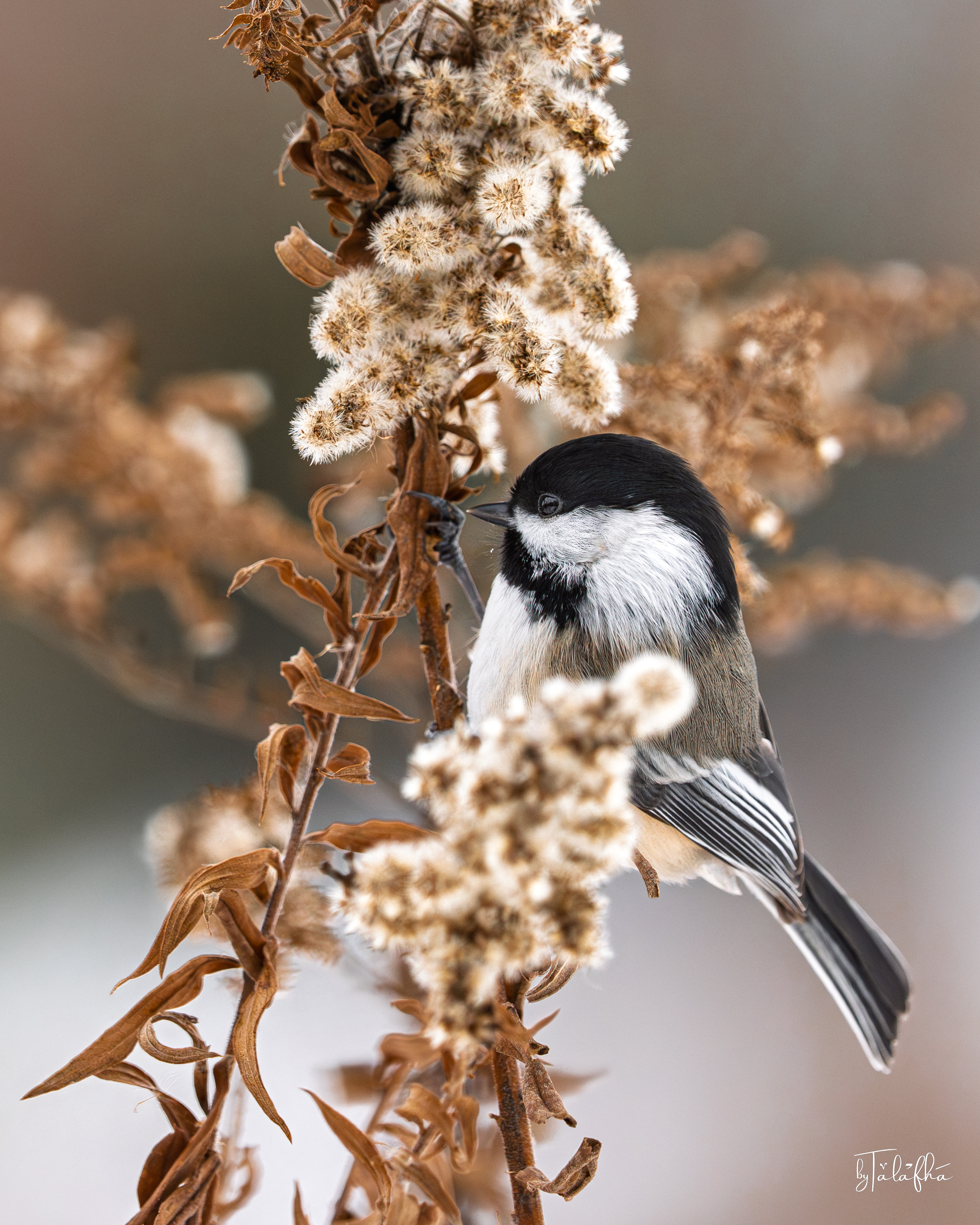
A Black-capped Chickadee moving through dried vegetation at RIM Park in Waterloo during early winter. The sequence shows the bird perched among mature seedheads, clinging beneath a slender stem, and moving close to the snow-covered ground with its wings extended. The black cap and throat, broad white cheeks, grey back, pale underparts, and warm buff flanks clearly identify the species. The photographs also capture the chickadee’s ability to use fine plant structure from multiple orientations, including an inverted position while clinging to a seed-bearing stem. Beyond the species portrait, the record documents the ecological value of standing vegetation through winter. Dried stems and seedheads remain structurally useful after the growing season, providing perches and potential feeding substrates for small resident birds even when the surrounding landscape is snow covered.
Observation location
RIM Park, 2001 University Avenue East, Waterloo, ON N2K 4K4, Canada
Observation date
December 1, 2025
Field note
A Black-capped Chickadee observed moving through standing winter vegetation at RIM Park. The bird used dried stems and seedheads as perches and clinging surfaces, including an inverted position beneath a slender stem. A third frame records the bird in motion immediately above the snow.
Planning and ecological relevance
What this observation makes visible.
This record illustrates why retaining standing vegetation through winter can matter ecologically. Seedheads, stems, and other residual plant structure continue to provide usable habitat after senescence, offering perch surfaces, cover, and potential food resources for resident birds. In managed parks and naturalized landscapes, seasonal maintenance practices such as delaying mowing or cutting can therefore affect habitat availability well beyond the growing season.
Place
RIM Park
RIM Park, 2001 University Avenue East, Waterloo, ON N2K 4K4, Canada
Location generalized to protect the observation.
43.52, -80.50
More from this observation
A closer look.
Additional photographs recorded during the same field observation.