Birds · Field Record
Green Heron
Butorides virescens
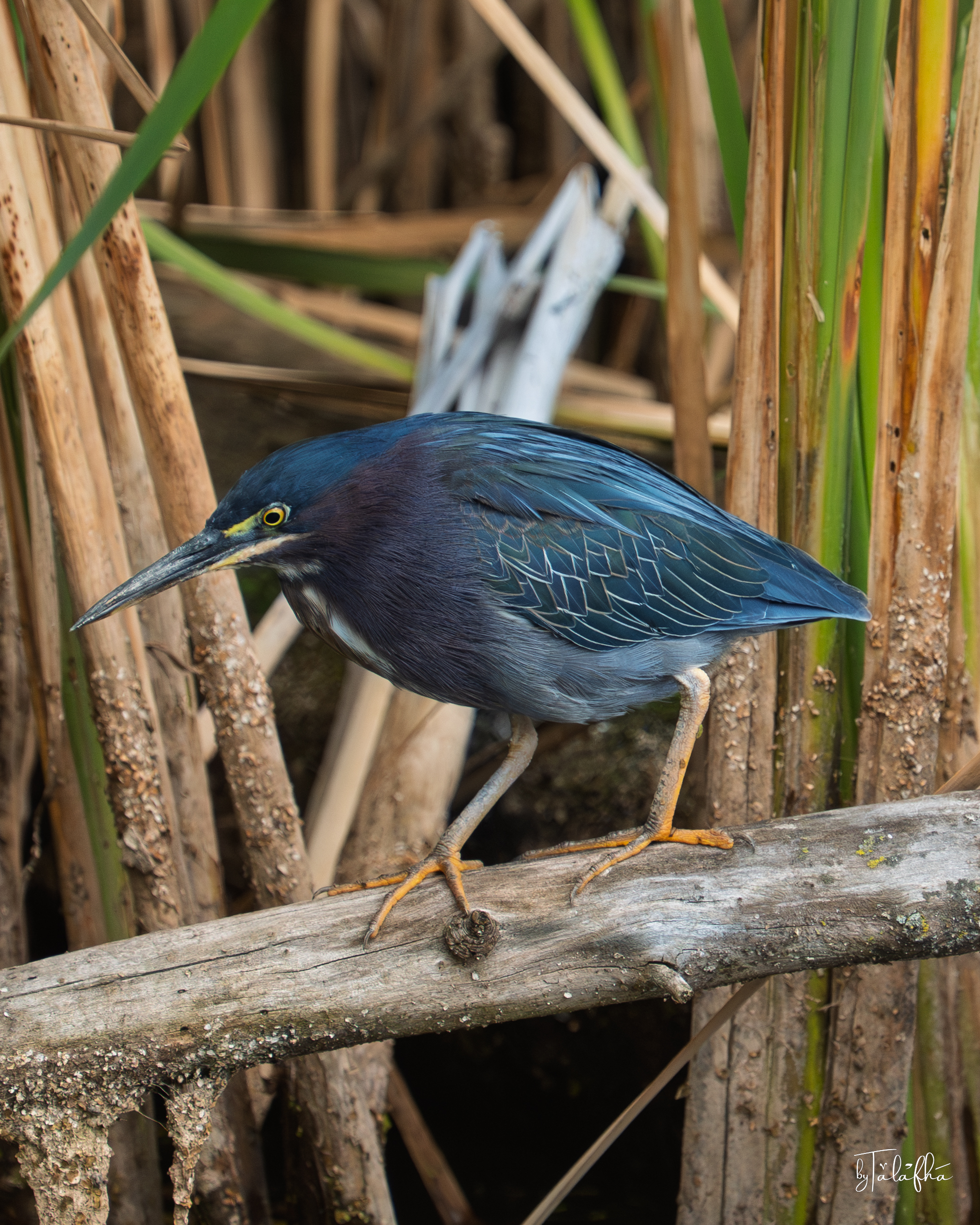
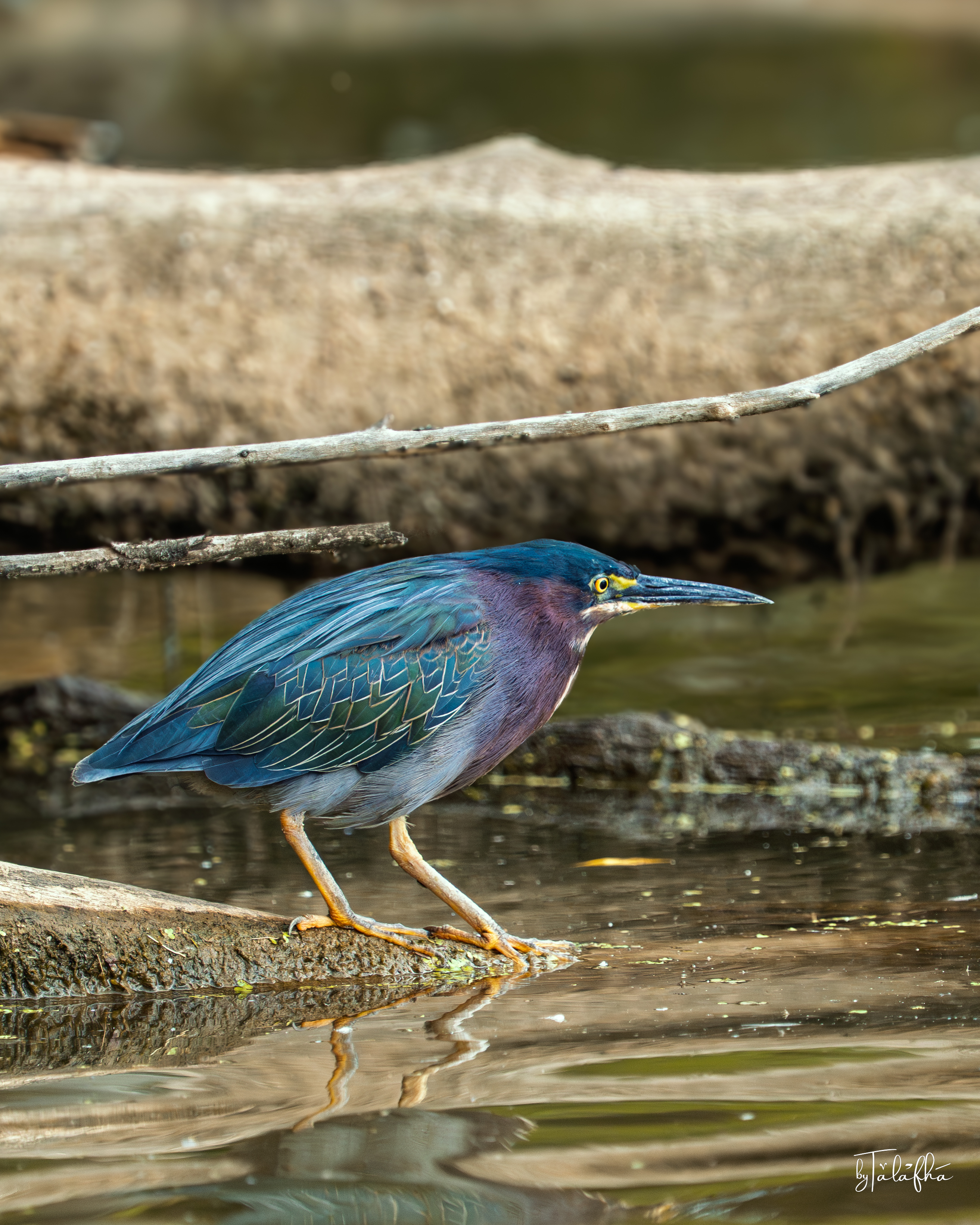
A Green Heron stands low along the edge of shallow water at Grindstone Marshes Trail, using fallen woody material and emergent wetland vegetation as perching and movement surfaces. The two photographs show the bird in slightly different parts of the marsh edge, first among dense stems and then on a partially submerged log close to open water. The bird’s compact form, dark green-blue back, chestnut-toned neck, yellow eye, long pointed bill, and yellow-orange legs strongly support identification as Green Heron. Its crouched posture close to the water is visible, but the photographs do not establish whether it was actively feeding at the moment of capture. The sequence is a useful record of wetland-edge structure at close scale. Fallen branches, shallow water, emergent vegetation, and small open-water gaps together create the kind of physical complexity used by wading birds moving through marsh habitat.
Observation location
Grindstone Marshes Trail, Burlington, ON L7T 1H3, Canada
Observation date
August 29, 2025
Field note
A Green Heron observed moving through the structurally complex edge of Grindstone Marshes. The bird used exposed branches and partially submerged wood immediately beside shallow water, remaining low and compact in posture.
Planning and ecological relevance
What this observation makes visible.
This observation shows the importance of fine-grained habitat structure within wetlands. Fallen wood, emergent vegetation, shallow water, and small open patches create a heterogeneous edge that can support feeding, resting, and movement by wetland birds. From a landscape perspective, ecological value lies not only in total wetland area but also in the arrangement and physical complexity of these microhabitats.
Place
Grindstone Marshes Trail
Grindstone Marshes Trail, Burlington, ON L7T 1H3, Canada
Location generalized to protect the observation.
43.29, -79.88
More from this observation
A closer look.
Additional photographs recorded during the same field observation.