Birds · Field Record
Double-crested Cormorant
Nannopterum auritum
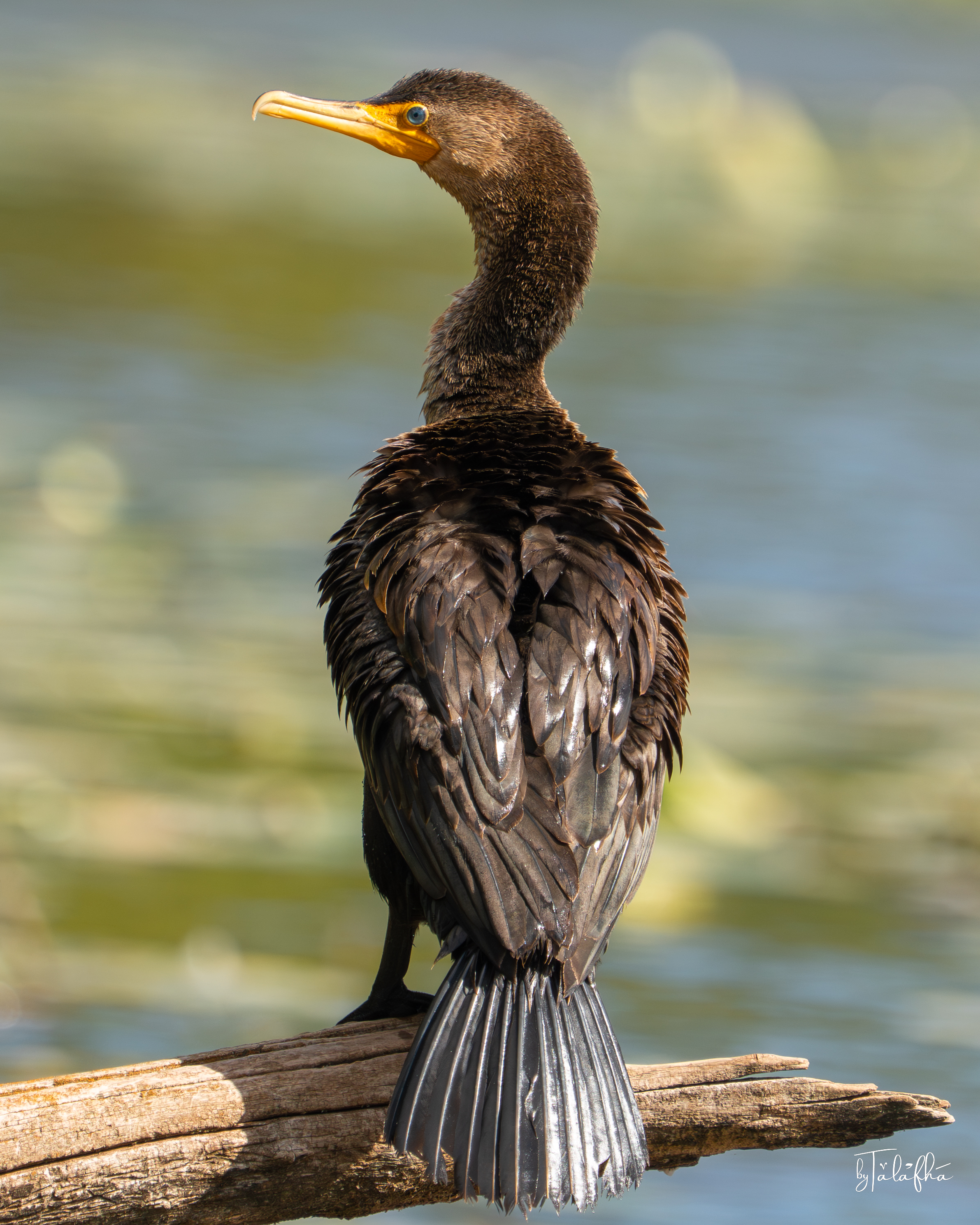
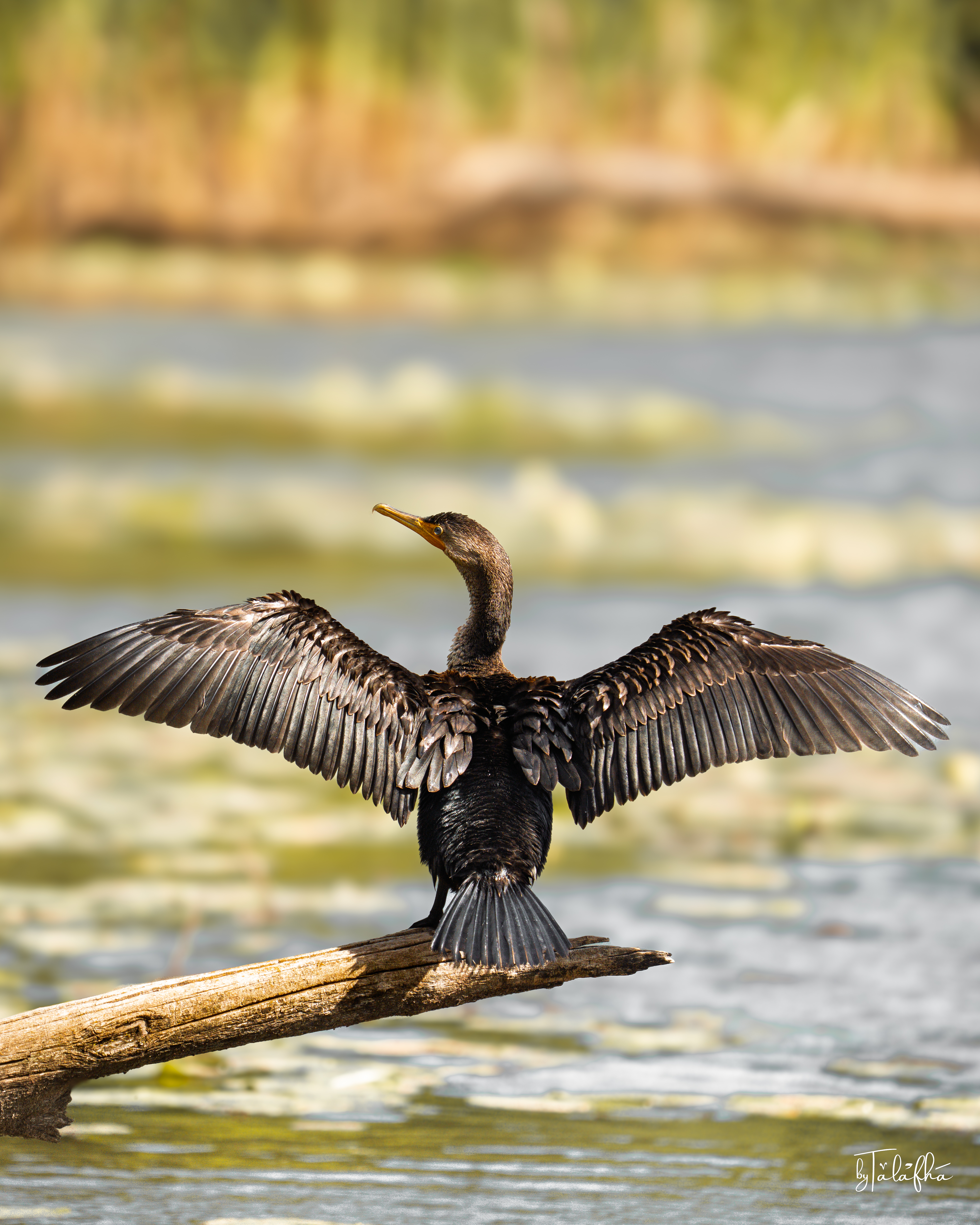
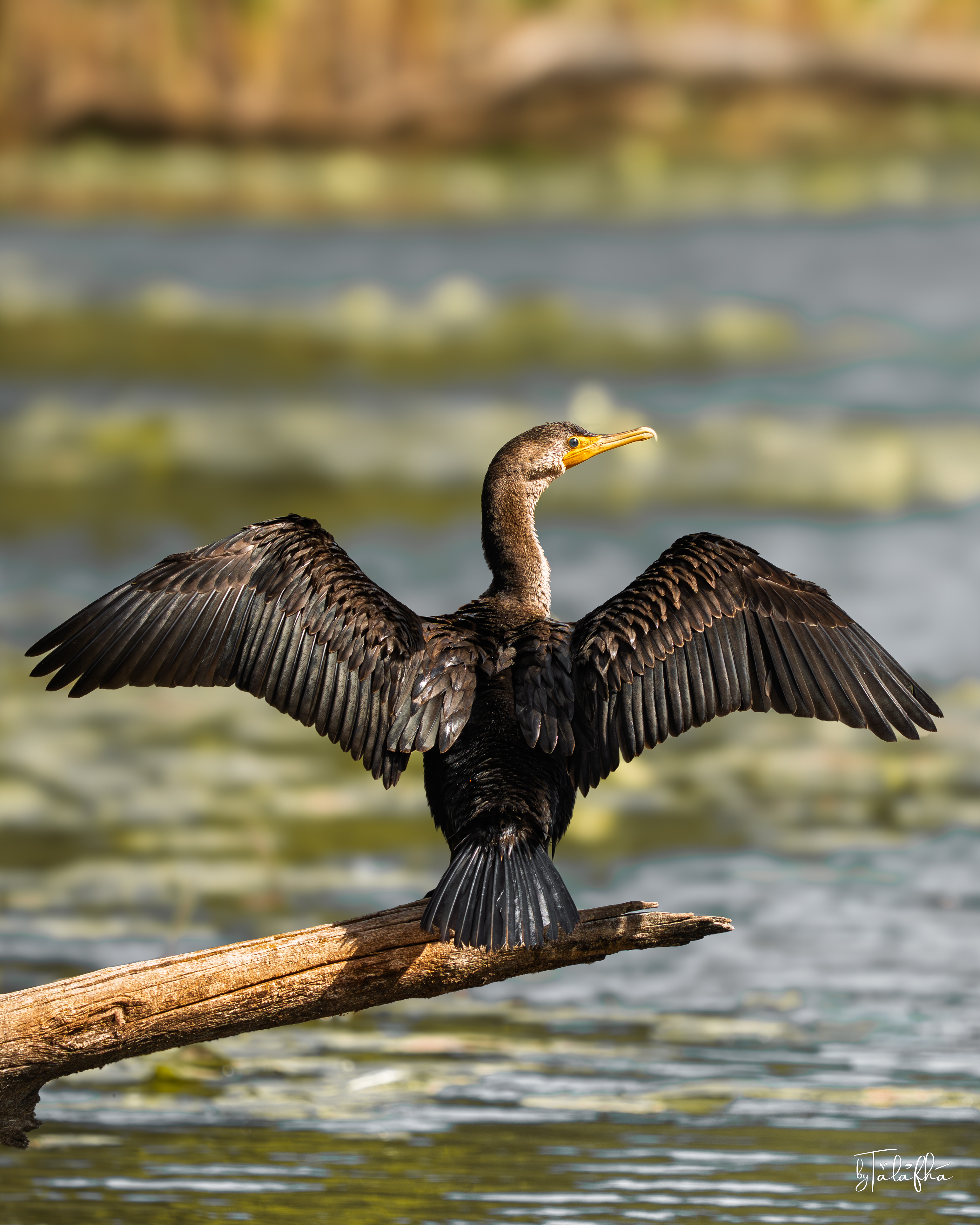
A Double-crested Cormorant perched on a sunlit log at Grindstone, photographed at close range in calm wetland water with floating vegetation in the background. The sequence includes a compact resting posture and two frames with the wings spread wide, documenting the characteristic wing-drying pose often associated with cormorants. The bird shows a long slightly hooked bill, bright yellow-orange gular skin at the base of the bill, blue eye, dark body plumage, and a long stiff tail. In the wing-spread frames, the full structure of the flight feathers and the broad open posture are clearly visible. The setting includes open water, a partially submerged perch, and patches of floating aquatic vegetation. As a field record, this observation is useful because it captures both species identity and behaviour in a legible wetland setting. The record shows how emergent perch structure within marsh water functions as a resting and maintenance site for waterbirds, not only as a feeding surface.
Observation location
Grindstone Marshes Trail, Burlington, ON L7T 1H3, Canada
Observation date
August 29, 2025
Field note
A Double-crested Cormorant was observed perched low over the water on exposed deadwood at Grindstone. Across the sequence, the bird remained stationary and adopted the familiar wing-spread posture, likely for feather drying after time in the water.
Planning and ecological relevance
What this observation makes visible.
This record highlights the ecological role of small structural elements within wetlands. Exposed logs and deadwood provide important resting and maintenance perches for aquatic birds. The observation also points to the value of heterogeneous marsh habitat, where open water, floating vegetation, and woody structure coexist at close range.
Place
Grindstone Marshes Trail
Grindstone Marshes Trail, Burlington, ON L7T 1H3, Canada
Location generalized to protect the observation.
43.29, -79.88
More from this observation
A closer look.
Additional photographs recorded during the same field observation.