Birds · Field Record
Little Owl
Athene noctua
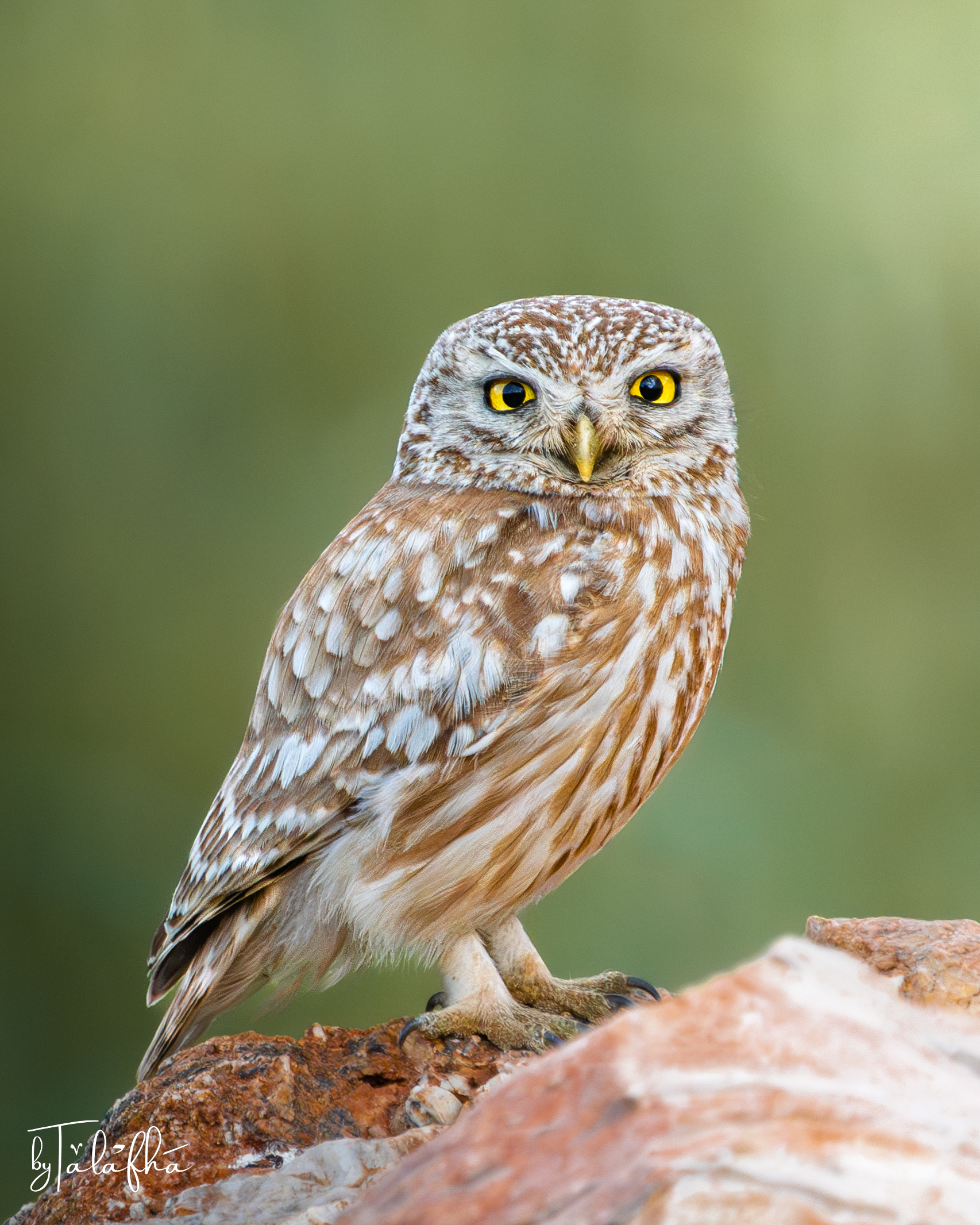
A Little Owl rests on an exposed rocky perch in Irbid, Jordan, facing directly toward the camera. The photograph captures the bird at rest rather than in movement, making details of its plumage, posture, eyes, and relationship to the perch particularly visible. The observation is also spatial. In northern Jordan, rocky ground, agricultural landscapes, stone walls, buildings, field margins, scattered trees, and other human-modified features can form part of the environments used by birds. A perch is therefore more than a photographic setting. It can provide elevation, visibility, shelter nearby, and a position from which an animal reads its surroundings. This single encounter does not establish how the owl uses the wider landscape, where it nests, or the extent of its territory. It does, however, document the presence of a small nocturnal predator within the landscape of Irbid and offers a starting point for observing how wildlife persists alongside agriculture and settlement.
Observation location
Irbid, Jordan
Observation date
April 10, 2025
Field note
The owl remained perched long enough for a close photographic observation. Its forward-facing posture and exposed position made the bird highly visible while the surrounding landscape fell outside the frame.
Planning and ecological relevance
What this observation makes visible.
Small wildlife observations can reveal relationships that conventional maps often overlook. Stone structures, field edges, abandoned spaces, trees, agricultural land, and settlement margins may function together as habitat. Repeated observations can gradually help make these relationships visible.
Place
Irbid
Irbid, Jordan
Location generalized to protect the observation.
32.60, 35.80